
Elle: Tu me tues. Lui: J’ai le temps.
— Hiroshima, Mon Amour, 1959.
In 1959, Alain Resnais and Marguerite Duras made a masterpiece about the impossibility of memory and the fear of forgetting. The French actress and the Japanese architect meet in Hiroshima, a city rebuilt over its own ruins, and attempt to speak about reconstruction. They cannot. The city is still there. The bomb is still there, under the concrete and the museums and the peace monuments. The past, in Resnais’s vision, does not pass. It simply waits forever.
What is happening in the Middle East today is, in a precise sense, a problem of memory and waiting. Iran has been waiting for decades, waiting under sanctions, waiting while its nuclear programme was negotiated, stopped, and resumed. And now the waiting may be over. Not because diplomacy has succeeded. But because the logic of deterrence has begun to collapse under its own weight. Diplomacy has again failed.

“I have seen everything in Hiroshima. Everything.”
The war between Israel and Iran did not begin in 2025. It began decades ago, in the shadows of intelligence operations and targeted strategic assassinations. What changed is not the nature of the conflict but its intensity. From a hard realist perspective, nothing is surprising about this. In an anarchic international system, states pursue security through power, and the Middle East has never been a region in which security was equally distributed. Israel has possessed a nuclear monopoly in the region since the 1960s.
Iran, which lost the security guarantee it possessed under the Shah when the Islamic Republic broke its alliance with Washington in 1979, has spent more than four decades attempting to reconstruct strategic depth through asymmetric means: Hezbollah, the Houthis, and ballistic missiles. This is not ideology. It is the logical and predictable behaviour of a state that has read the international system correctly and concluded that the only protection against regime change is the credible threat of devastating revenge.
Hiroshima, Mon Amour is not a love story in any conventional sense. It is a film about two people who cannot escape what the Allies have done to them. The French woman carries Nevers inside her; the Japanese man carries August 1945. They meet in the ruins of what destruction leaves behind, which is nothing but something worse: no felligs, just continuation.
Iran in 2026 is a state that carries its ruins with it. The memory of the 1953 CIA’s coup, which removed Mohammad Mosaddegh and reinstalled the Shah, has never been abstract in Tehran. It is the founding trauma of Iranian foreign policy. Every American negotiation is read through it. Every European diplomatic initiative is set against it. When John Mearsheimer argues that great powers behave according to the logic of survival rather than morality, he is describing, with uncomfortable precision, today’s Iranian strategic calculus. A state that has undergone regime change once does not forget. It prepares for the next move.
The nuclear programme is not a theological project. It is a deterrence project. The American commitment to Israeli security is unconditional in ways that make it impossible for any diplomatic relations with Tehran. European states, unable to act independently and unwilling to break with Washington, have oscillated between stupid and rhetorical calls for de-escalation and total irrelevance. The institutions designed to manage these crises, like the United Nations, have no authority and no credibility over states that have already decided to act.
The West has seen nothing in Tehran.
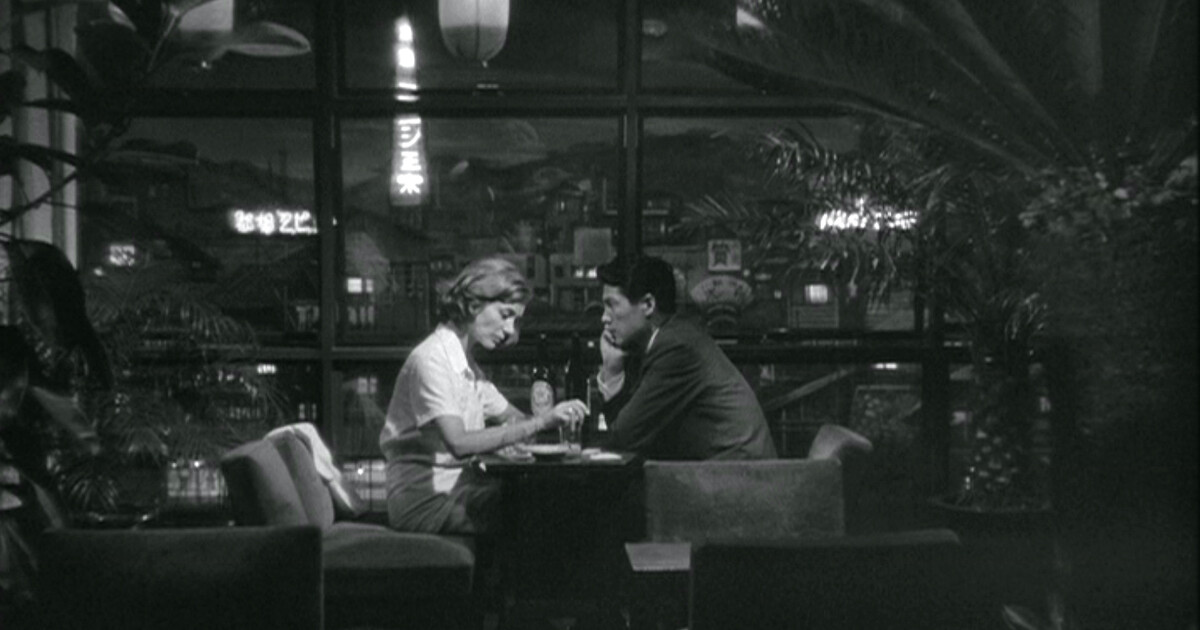
“You destroy me. You’re so good for me.”
Realism yet does not offer comfort. It offers clarity. And the clarity available here is simple: a state that has been sanctioned, surrounded, and denied security guarantees for forty-six years has behaved exactly as realist theory predicts. It has done what states do. That Western governments’ surprise is not a failure of intelligence or empathy. It is a failure of honesty.
The lovers in Hiroshima, Mon Amour, never find resolution. They separate. The city remains. The past remains. There is no ending. What Duras understood, and what contemporary diplomacy refuses to accept, is that there are conflicts in love structured not by misunderstanding but by incompatible necessities of the parties. Tehran is not a problem to be solved through the right negotiating framework. It is a consequence of history, of power, of operations started by previous American Presidents, and is the result of the system that we built. Maybe in future we will see another Hiroshima, Mon Amour, but in Tehran.
 gc
gc 
You must be logged in to post a comment.