Chow Mo-wan: Someone must have made the first move.
Su Li-zhen Chan: It doesn’t matter who made the first move.
-In The Mood For Love, 2000.
In September 2000, one of the most influential films of the twenty-first century premiered in Hong Kong cinemas. Hong Kong and mainland China, as portrayed by Wong Kar-wai, are on the edge of profound transformation. Only a year later, China would enter the World Trade Organisation; two decades later, it would stand at the centre of global geopolitics. Wong Kar-wai’s In the Mood for Love did not cause this transformation, of course. Yet it offers a remarkably evocative lens through which to read China’s contemporary international position: a story of timing, miscommunication, and the tension between future and choice.
In just over twenty-five years, China has moved from a Third Worldist state to an undisputed global power. The question that now structures international politics is no longer whether China has risen, but how and who will make the first move.
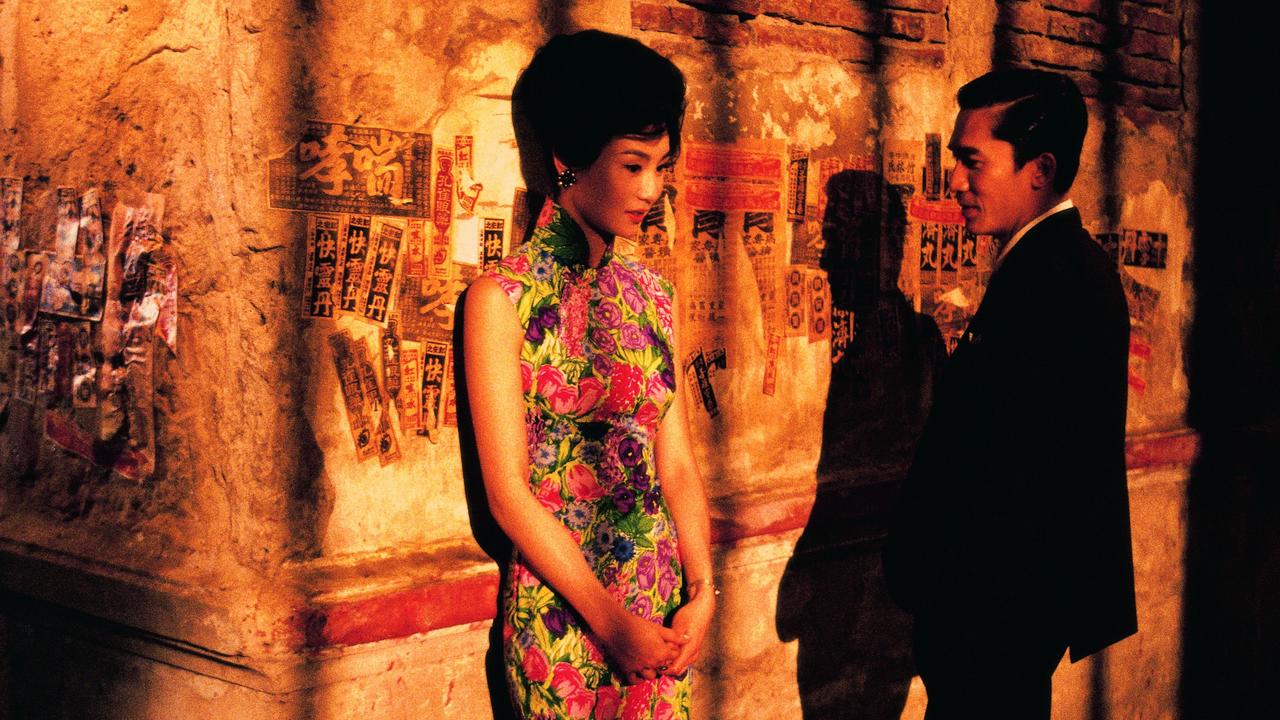
Who will make the first move?
The current international chessboard is marked by uncertainty, rumours, and signals that are often deliberately opaque. Reports of investigations or disciplinary actions within the People’s Liberation Army leadership—such as speculation surrounding senior figures in the Central Military Commission—do not point to fragmentation, but rather to a single underlying reality: China’s political system is more unified than at any point since the Maoist era.
Xi Jinping is no longer merely the most powerful leader of the People’s Republic of China. He has become the embodiment of the state itself. Party, government, and military authority converge in his figure, and Xi Jinping’s philosophy is no longer just an ideological line, but the organising principle of governance. The elimination of factionalism and conflicts of interest has produced a form of centralised authority that is striking even by the standards of the Chinese Communist Party. From a Western democratic perspective, this system is often described as a dictatorship. Yet such a label explains little. What we, western people, observe instead is a different mode of governance, one in which institutional roles exist but are hierarchically subordinated to a single political centre. For post-Mao China, this is an exceptional model of power, breaking decisively with the collective leadership that defined the Hu Jintao era.
This evolution can be interpreted through Yan Xuetong’s theory of moral realism. Yan argues that great powers rise and fall not because they adhere to liberal values such as democracy or the rule of law, but because of their ability to exercise moral authority, understood as credibility, strategic consistency, and responsibility toward allies.
From this perspective, Xi Jinping’s leadership has been less about ideological innovation than about strategic shift. Xi has acted not only as a statesman but as a long-term strategist intent on restoring China’s centrality in global trade, diplomacy, and institutional influence. Where the United States increasingly appears inconsistent, China presents itself as patient and diplomatic. As Yan Xuetong notes, “The strongest power is the one others are willing to follow.” In today’s international system, followership matters more than formal alliances, and China has proven increasingly capable of attracting it.

“Look at me. Do you have a mistress?”
China today is less feared than it has acquired a central role in the world. States that once sought to exclude Beijing from the international order now find themselves economically and politically dependent on stable relations with it.
Canada offers a revealing example. Once aligned closely with the Trump administration’s confrontational approach to China, Ottawa has more recently moved toward pragmatic re-engagement. According to the BBC, negotiations between China and Canada have included the easing of tariffs on Chinese electric vehicles imposed in 2024, in exchange for China lowering retaliatory tariffs on key Canadian agricultural exports. This shift is not ideological. It is structural. Liberal democracies remain deeply dependent on global trade and external markets, and China occupies a pivotal position within them. Economic interdependence, long framed as a source of vulnerability for Beijing, increasingly constrains Western policy choices instead.
“I didn’t expect it to hurt that much.”
The American century appears to be drawing to a close. The liberal international order, rather than being dismantled by external challengers, has been hollowed out from within. Western democracies, confronted with the contradictions of globalisation, have too often chosen political polarisation and far-right populism over major structural economic reform.
The result has been a shift from solving problems to communicating them, from governance to spectacle. In doing so, Western societies have lost not only strategic coherence but also the ability to speak convincingly about their own futures. Like the protagonists of In the Mood for Love, the international system today is defined by missed encounters and unspoken intentions. The failure to communicate has produced distance, mistrust, and a growing sense of isolation.
The question, then, is not simply who will make the first move. Sometimes it does not matter who moves first. What matters is whether anyone still knows how to speak.
 gc
gc 
Leave a comment